Products

Category:
BaojiBooster Fan
info50@henglongplastic.com
Product Description
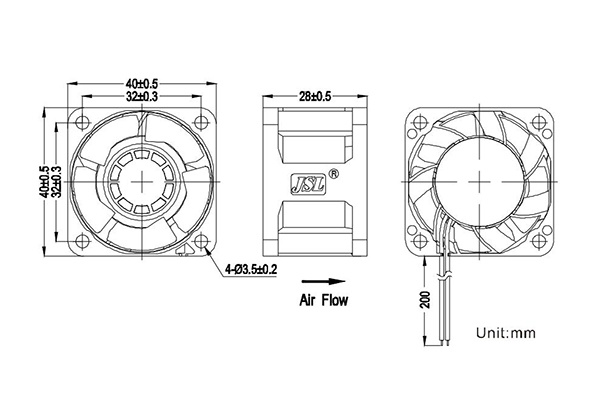 | 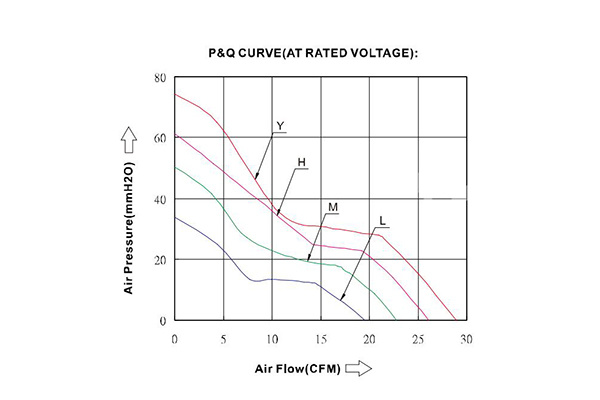 |
| Specifications and models | Bearing mode | Operating voltage | Starting voltage | Current | Rotating speed | Air volume | wind pressure | Noise value | Available features (optional) | Weight | |||
| VDC | VDC | A | RPM | CFM | mmH2O | dBA | frequency generator (FG) | Speed detection (RD) | Temperature control | pulse width modulation | g | ||
| JDY4028B | Ball | 12 | 10.8~13.2 | 1.5 | 22000 | 28.93 | 74.27 | 60.8 | ● | ● | ● | 50.0 | |
| JDH4028B | 10.8~13.2 | 1.0 | 20000 | 26.33 | 61.27 | 59.7 | ● | ● | ● | ||||
| JDM4028B | 10.8~13.2 | 0.8 | 18000 | 22.81 | 50.18 | 56.2 | ● | ● | ● | ||||
| JDL4028B | 10.8~13.2 | 0.6 | 15000 | 19.55 | 33.92 | 52.1 | ● | ● | ● | ||||
| JDY4028B | 24 | 21.6~26.4 | 1.0 | 22000 | 28.93 | 74.27 | 60.8 | ● | ● | ● | |||
| JDH4028B | 21.6~26.4 | 0.7 | 20000 | 26.33 | 61.27 | 59.7 | ● | ● | ● | ||||
| JDM4028B | 21.6~26.4 | 0.5 | 18000 | 22.81 | 50.18 | 56.2 | ● | ● | ● | ||||
| JDL4028B | 21.6~26.4 | 0.3 | 15000 | 19.55 | 33.92 | 52.1 | ● | ● | ● | ||||
| JDY4028B | 48 | 43.2~52.8 | 0.5 | 22000 | 28.93 | 74.27 | 60.8 | ● | ● | ● | |||
| JDH4028B | 43.2~52.8 | 0.4 | 20000 | 26.33 | 61.27 | 59.7 | ● | ● | ● | ||||
| JDM4028B | 43.2~52.8 | 0.3 | 18000 | 22.81 | 50.18 | 56.2 | ● | ● | ● | ||||
| JDL4028B | 43.2~52.8 | 0.2 | 15000 | 19.55 | 33.92 | 52.1 | ● | ● | ● | ||||
A booster cooling fan represents an advanced active cooling solution designed to supplement primary thermal management systems where additional airflow is required. This specialized fan system operates as an auxiliary cooling device that increases air movement across heat exchangers, radiators, or electronic components to enhance heat dissipation capacity. The fundamental design of a booster cooling fan typically incorporates a brushless DC motor driving a multi-blade impeller, engineered for optimized airflow characteristics and acoustic performance.
Modern booster cooling fan units feature intelligent control systems that automatically adjust operational speed based on temperature readings or system demand. This sophisticated approach enables the booster cooling fan to provide additional cooling precisely when needed while minimizing energy consumption and noise generation during normal operation. The construction typically utilizes materials selected for durability and corrosion resistance, including composite housings and balanced impellers designed for extended service life in challenging environments.
The integration capabilities of a contemporary booster cooling fan represent one of its most valuable attributes. These systems can be seamlessly incorporated into existing thermal management configurations through various mounting options and control interfaces. The electrical connectivity of a modern booster cooling fan typically includes multiple options for power input and signal communication, allowing for straightforward installation and system integration. Advanced models incorporate PWM (Pulse Width Modulation) control for precise speed regulation and current monitoring capabilities for diagnostic purposes.
Focus on us
Scan code to add WeChat
Contact: Mr. Bao
Mobile:+86-13823587960
E-mail:info@jslfan.com
Address: 3rd Floor, 59 Yanshan Avenue, Yanchuan Community, Yanluo Street, Bao 'an District, Shenzhen
Links: